
The earliest ancestors of the Dutch branch include Jan I van der Dussen, a knight who was wounded in 1288 at the Battle of Woeringen (on the Rhine near Cologne), where he fought alongside the Duke of Brabant. It was his grandson, Jan III, who built a keep on the banks of the River Dussen (+1340), which became today’s Dussen Castle.
A little later, there was Nicolas, a Teutonic knight, commander of the order at Gemert (1437) and then Utrecht, adviser to Charles the Bold.
Arendt, born around 1418 in Brussels, was instrumental in introducing and spreading of Flemish tapestries in Italy. Nicknamed Rinaldo Boterham, he was both an upholsterer and a tapestry merchant; a great traveller and well introduced to the ruling families of Italy (the Gonzagas, Este, Sforza, etc.), he is said to have supplied them with numerous works.
Adriaan, who came from Delft like most of the van der Dussens from the ‘Dutch’ branches, made his career with the East India Company, where he had a reputation for being ‘tough’. For example, he was responsible for supressing native rebellions, then went hunting for slaves to replace the natives who had been decimated… He was lieutenant-governor of the Batjan Islands, adviser to the Sultan of Djohor, then (in 1620) in charge of the trading post at Djambi (Sumatra).
Around the same time (in 1623), another Adriaan van der Dussen, a cousin of the former, was accused of plotting against the life of the Prince of Orange (Maurice de Nassau, son of Le Taciturne). He only survived by fleeing, hidden in a boat under a load of cheese (!). Some of his accomplices were arrested and executed.

Paulus was a rear admiral and took part in the main naval battles of the era: the expedition (1688) that brought the Prince of Orange to England, where the latter took power, the Battle of The Hague (1692), and the capture of Gibraltar by the English (1704). In the course of his long career, he won no fewer than 64 naval battles!
One of the most famous van der Dussen was undoubtedly Bruno, who represented the United Provinces at the conclusion of the Treaty of Utrecht with France in 1713. His seal and convoluted signature can be admired at the bottom of the treaty (Pirenne, History of Belgium in 4 volumes). Quoted by Saint Simon, Voltaire, Torcy and others.
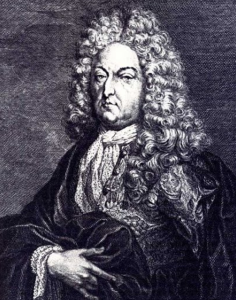
Jan Lucas, Bruno’s grandson, was a wealthy lord, owning a magnificent castle and a famous collection of paintings. He died in 1772 in the Amsterdam theater fire. His daughter Mietje is the heroine of a lovely book of family memories (Mietje van der Dusssen door LE, Ed. RUYS, Utrecht 1918) recounting her youth and then her settlement deep in the Gelderland countryside. See extracts in the « varia » section.
In the « Belgian » lineage (this word had no meaning at the time) let us remember Libert, alderman of the city of Brussels in 1577, lord of the Tower in Witterzée and of Bornival. It was he who started a precious family notebook, called « Memorial boucksken », which his descendants in turn kept for 150 years. The full text will be provided later.
His grandson, Louis-François, was murdered in Brussels in 1642, at the age of 29. We don’t know much more…
Jean-Adolphe was a captain in the Spanish cavalry. In 1673, he married Renelde Thérèse Spruyt, great-great-granddaughter of Jeanne van der Gheynst, the mother of Marguerite de Parme through the affair of the young Charles of Habsburg, the future Charles V. It was he, Jean-Adolphe, who, in 1685, built the manor of Kestergat, where the « Belgian » van der Dussens settled.
Eugène François, lord of Bornival, lord of Ath in 1715, baron of the Holy Roman Empire, married Constance Thérèse Rubens, the painter’s great-granddaughter, in his second marriage. Unfortunately, their line has now become extinct, and no contemporary van der Dussen can claim to be a descendant of Rubens!
François Simon Charles was mayor of Molenbeek St Jean under the Dutch regime (1819). He lived in the château des Etangs Noirs, which has since disappeared.Today, Molenbeek still has a rue van der Dussen and a rue des Etangs Noirs…
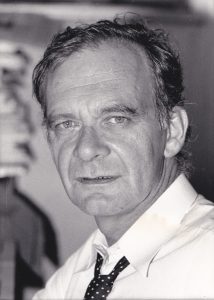
Jean-Marie, known as « Jean Kestergat », was a journalist with La Libre Belgique for almost 40 years (until 1987). He was regarded as a leading specialist on Africa. In addition to his regularly published reports, he wrote books on Africa and novels. See his bibliography and extracts from his works in the chapter devoted to him. He was a member of the Académie Royale des Sciences d’Outre-Mer. We owe him the restoration of his ancestors’ manor house at Kestergat, as well as the writing of an essay entitled « les van der Dussen », which includes a complete genealogy and forms the basis of this website.
And there are many more! The official genealogy* lists nearly 500 individuals who are descendants of Jan I between 1250 and 1900.
To find out more about these people and others, as well as the genealogy* of the ‘Dutch’ and ‘Belgian’ van der Dussens, continue exploring this site: you’ll find fascinating documents – some of them unpublished – and links to other sources of information.
* This official genealogy has been contested in recent years, and the fine family tree of the van der Dussens, continuous from 1250 to the present day, may contain several fractures. See the « genealogy » section below.